
NodeMasterX is a developer-centric blockchain RPC service built by Neural Inverse, emphasizing simplicity, portability, and zero-friction integration. It's designed for Web3 developers who want reliable node access without dashboards, vendor lock-in, or sales pitches.

NodeMasterX embodies a "Better B2D" (Business-to-Developer) approach:
No UI: Zero dashboards. Zero clicks. Just code.
No Lock-in: Standard JSON-RPC 2.0. Switch providers in 30 seconds.
Better B2D: Built by developers, for developers. No sales calls required.


Web3 APIs can be used with various programming languages, including JavaScript, Python, and Go. Most libraries that interact with Web3 APIs are available in these languages, allowing developers to choose the one that best fits their project requirements.
Yes, many Web3 APIs are designed to be compatible with multiple blockchain networks beyond Ethereum. For instance, APIs can be used with blockchains like Binance Smart Chain, Polygon, and others that support similar protocols. Developers can leverage these APIs to build cross-chain applications.
Using a Web3 API offers several benefits, including enhanced security through decentralized architecture, the ability to interact with smart contracts, and access to real-time data from the blockchain. It also allows developers to build applications that are resistant to censorship and provide users with greater control over their data.
To connect to a Web3 API, you typically need a library like Web3.js or Ethers.js. These libraries allow you to create a connection to the Ethereum blockchain or other compatible networks. You will need to provide a provider, which can be a local node or a remote service like Infura, to facilitate the connection.
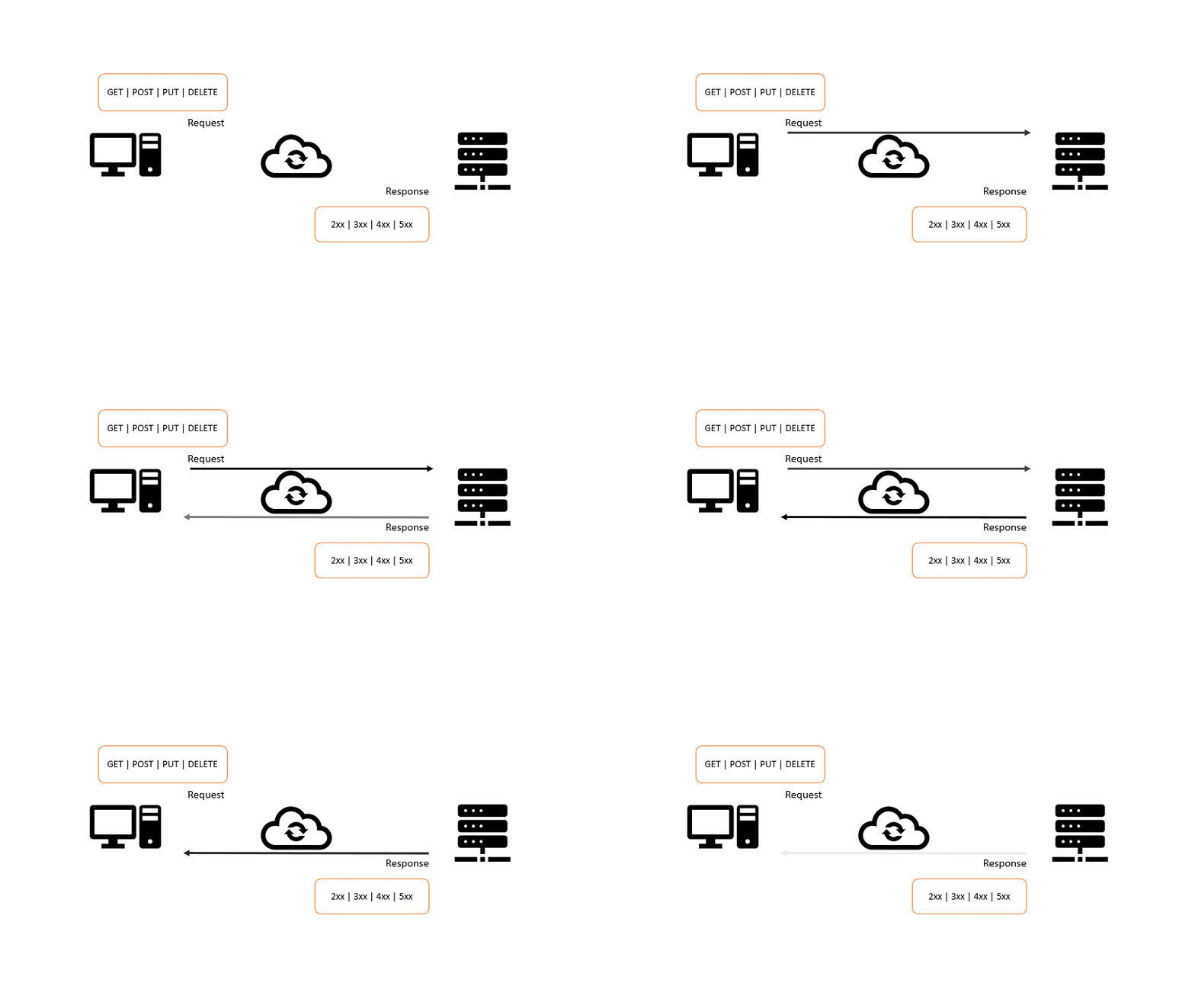
A Web3 API is an application programming interface that allows developers to interact with decentralized applications (dApps) and blockchain networks. It provides a set of functions and protocols to facilitate communication between the front-end and back-end of a dApp, enabling features like smart contract interactions, wallet connections, and data retrieval from the blockchain.

